
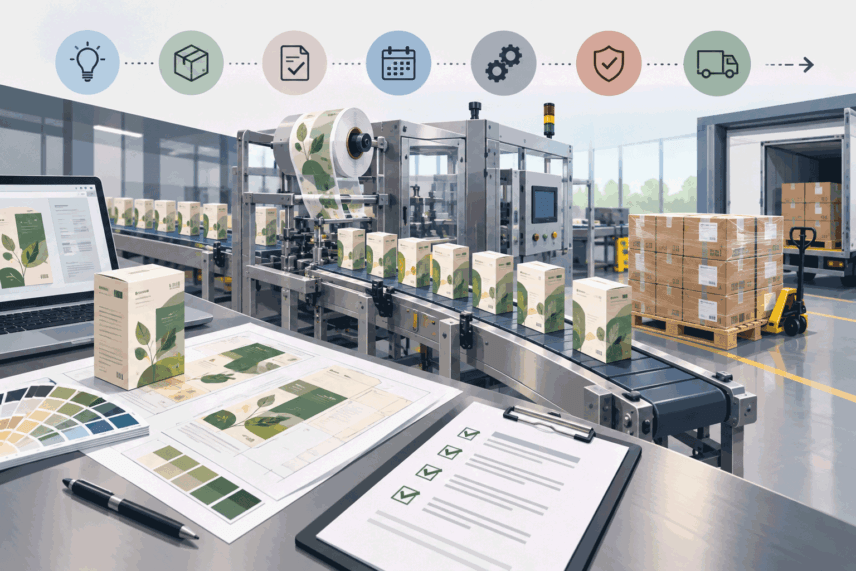
A missed retail launch date costs more than the packaging turnaround behind it. When a launch slips, the brand loses its shelf window and its promotional timing.
The packaging process is rarely the biggest number in that loss. The delay is. And the cost compounds. A product that reaches the shelf late starts from a weaker position than one that shipped on time. Momentum and placement go to whoever got there first, so the lost weeks keep costing well into the next year.
“One in four CPG product launches ran behind schedule in the past year, and each slipped about 2.4 weeks on average”
DOSS 2026 CPG Operations Benchmark, from a survey of 230 U.S. operations leaders
Most delays are not one failure. They come from a short list of predictable gaps in materials, approvals, forecasting, scheduling, quality, freight, and communication. Each adds to the lead time while every team assumes another is handling it. All of them are preventable, with the right process and the right contract packaging partner. This article covers why packaging timelines slip, the seven most common causes behind delays, and the fix for each.
Why Packaging Timelines Slip
A packaging lead time is the full stretch between approving a project and receiving finished, shelf-ready goods. It spans materials, scheduling, production, quality checks, and freight. A slip in any one stage drags the whole timeline with it.
The costliest delays are rarely the obvious ones. They are the small gaps that stack up quietly while the launch date still holds firm on paper. In the same benchmark, the largest delay stages were logistics and freight, manufacturing, raw material sourcing, and quality control, as reported by Supply & Demand Chain Executive.
Those four stages feed the seven causes below, along with the approval, forecasting, and communication gaps around them. Each has a preventable root cause and a routine fix.
Here is what each one is, why it slips, and how to stop it.
1. Material and Component Lead Times
Films, cartons, closures, and labels each carry their own supplier lead times. Those clocks often run longer than the production itself. One back-ordered component can hold an entire run. Raw material sourcing drove one in five launch delays in the benchmark data.
Prevention starts early. Lock materials, qualify alternates before they are needed, and standardize components so a single order covers several runs. Standardizing flexible packaging shortens this stage and usually lowers cost. Materials often set the longest clock on a project. Plan the timeline backward from the launch date, and place the material order first.
2. Artwork and Label Approvals
Artwork sits in review far longer than most teams expect. Version confusion makes it worse. Half of CPG operations leaders shipped a product with incorrect labeling, packaging, or documentation last year, usually from a miscommunicated revision. The fix is tighter control.
Front-load specifications, lock artwork before materials are ordered, and route approvals through one owner instead of a scattered email chain. Getting labeling right the first time removes one of the most common sources of rework. Approving print proofs and dielines against final specifications, not draft ones, prevents the reprint that costs weeks.
3. Inaccurate or Late Forecasting
A forecast that arrives late, or misjudges volume, forces rushed runs and repeat setups. Both add time. A number that lands after the production slot is booked can miss the window and push the run to the next opening. Honest forecasting prevents the scramble.
Build it early, and size it to real demand. Right-sizing the run to an efficient volume also holds cost per unit down, which is why minimum order quantities and forecasting belong in the same conversation. A safety-stock buffer sized to the production lead time gives a launch room to absorb a strong first few weeks without going out of stock. That protects the retailer relationship as much as the timeline.
4. Line Scheduling and Changeovers
Manufacturing and production ranked among the top delay stages, close to a third of the total. A plant near capacity cannot always fit a new job on the brand’s timing. Every changeover between jobs burns hours of setup.
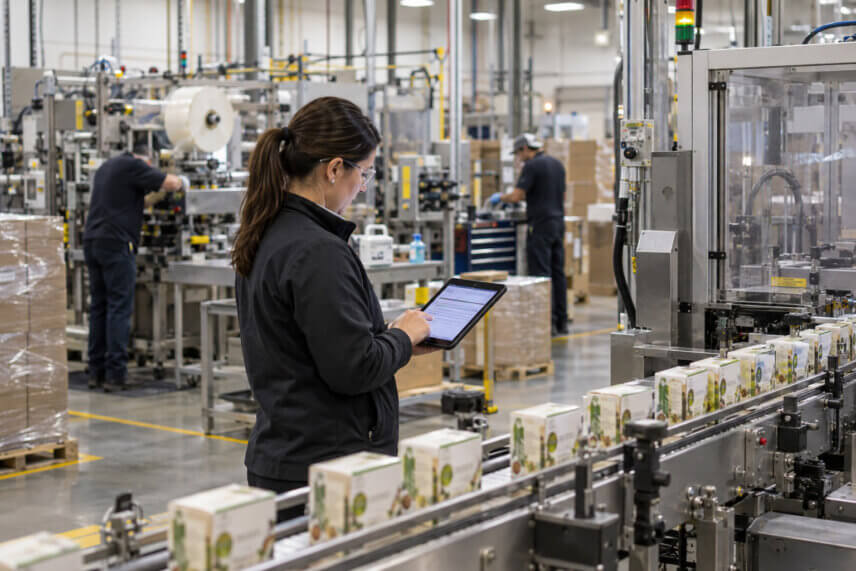
The fix is to match the run to a facility with real availability and the right equipment, not to force it onto a booked line. Reserve the production slot early, against a realistic material-ready date. This is where a network matters far more than any single plant.
5. Quality Holds and Rework
A failed inspection stops a shipment cold. Rework often costs more time than the original run. Quality control and compliance drove nearly one in five delays. Prevention is upstream. Use certified facilities, lock specifications before production, and build quality checks into the process instead of bolting them on at the end.
Plants carrying certifications such as SQF, NSF, and Organic operate to documented standards that catch problems before they become holds. Request the supporting documentation up front, from batch records to certificates of analysis. A hold then clears with evidence rather than a fresh round of testing.
6. Freight and Logistics
Logistics and freight was the single largest delay stage, a third of all late launches. A finished run that misses its delivery window can trigger retailer chargebacks on top of the lost time. Shorter, better-planned freight lanes reduce that exposure. Producing closer to materials and end markets is one way to shorten them.
Coordinated fulfillment and logistics keep the last stage from undoing the work of the first six. A retailer’s routing guide and delivery window are their own discipline. Build them into the plan from the start, and the penalties that come from treating freight as an afterthought disappear.
7. Communication Gaps and Single-Threaded Vendors
The most avoidable delays trace back to communication. A slow answer, an unclear owner, or a vendor who goes quiet at the wrong moment turns a small issue into a lost week.
The fix is structural, not personal. One accountable point of contact. Real-time answers. Consistent follow-through on every open item. This is often the difference between a project that holds its schedule and one that quietly drifts. A regular status cadence and one shared source of truth for specifications keep every team on the same version rather than three.
How the Right Partner Removes Most Delays Before They Start
Read back through those seven causes and a pattern emerges. Almost every one is prevented by the same things. A partner who plans, routes work to the right plant, and communicates without being chased. That is the model we built Assemblies Unlimited around.
Since 1993, we have coordinated a network of more than 300 co-packers across the country, on thousands of projects. When a run strains one plant’s schedule, it moves to another with the capacity and equipment to hit the date. Our plant certifications span AIB, SQF, IFS, GFSI, NSF, Organic, Halal, and Kosher. We source raw materials locally, manage the supply chain, and handle back-end logistics. The stages most likely to slip are owned, not left to chance. One project manager owns the timeline from intake to shipment.
“We partner closely with our clients to help them scale efficiently and meet critical deadlines.”
—Justin Dickert, President of Assemblies Unlimited
In practice, we answer in real time, follow through on every request, and stay accountable for each project. We keep a supplier network deep enough to meet real demands on quality, price, and delivery. That combination is why brands hand a launch to a turnkey packaging partner instead of managing a dozen vendors alone.
The Bottom Line
Packaging delays are predictable, which is exactly why they are preventable. The seven causes above account for most slipped timelines. Each has a fix a capable partner applies before it becomes a problem. Lock materials early. Control approvals. Forecast honestly, schedule realistically, build quality in, plan freight, and communicate relentlessly.
The brands that hit their dates treat packaging as part of their commercialization strategy, not an afterthought bolted on at the end. Bring the packaging partner in early, while the launch date is still a plan rather than a deadline. Choosing the right co-packer is the first step. Brands planning a launch can request a quote to map the timeline before a date is on the line.
